REPORT 2025
Refugees in Spain and Europe
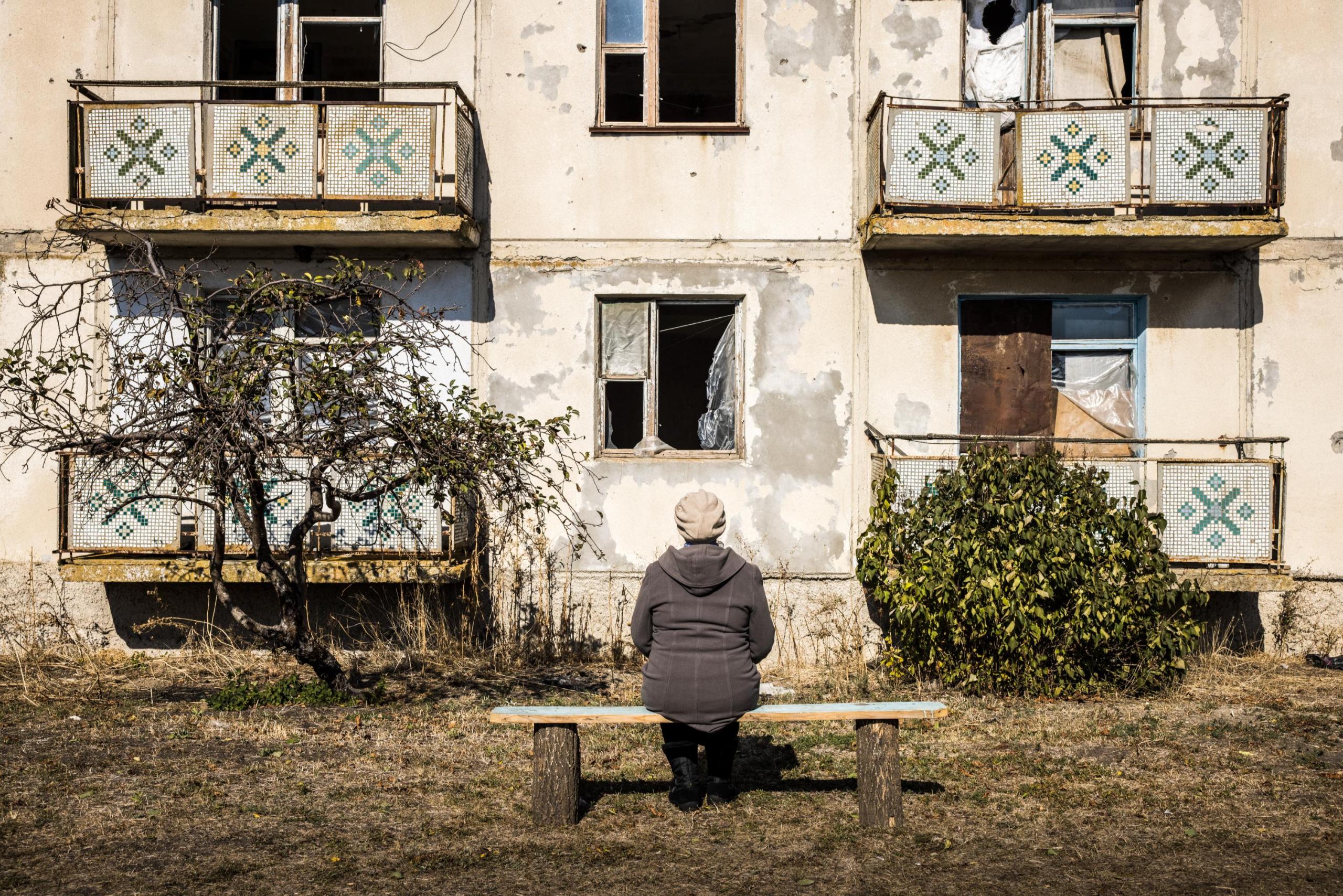
© Abed Zaqot / Gaza
Refugees in 2024
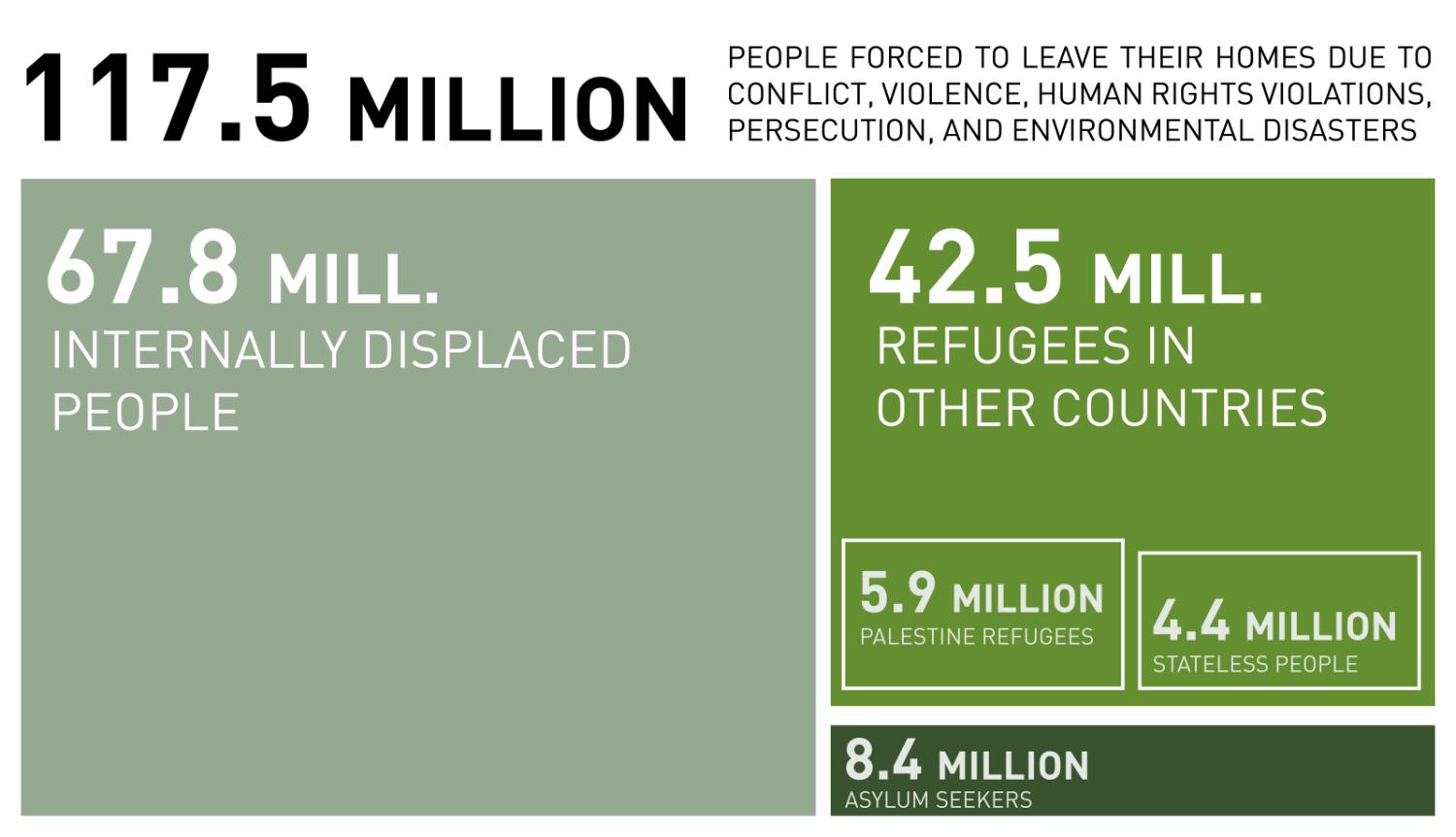
CEAR’s 23rd Annual Report examines the situation of refugees in Spain and Europe in 2024, a year in which the number of forcibly displaced people worldwide reached 123.2 million.
In this report, we look at the situation in the main countries of origin of refugees and displaced persons and the primary obstacles they face on their migration journey, among other things.
© UNHCR / South Sudan
1. THE GLOBAL EXODUS
Worldwide forced displacement figures
Main global displacement crises
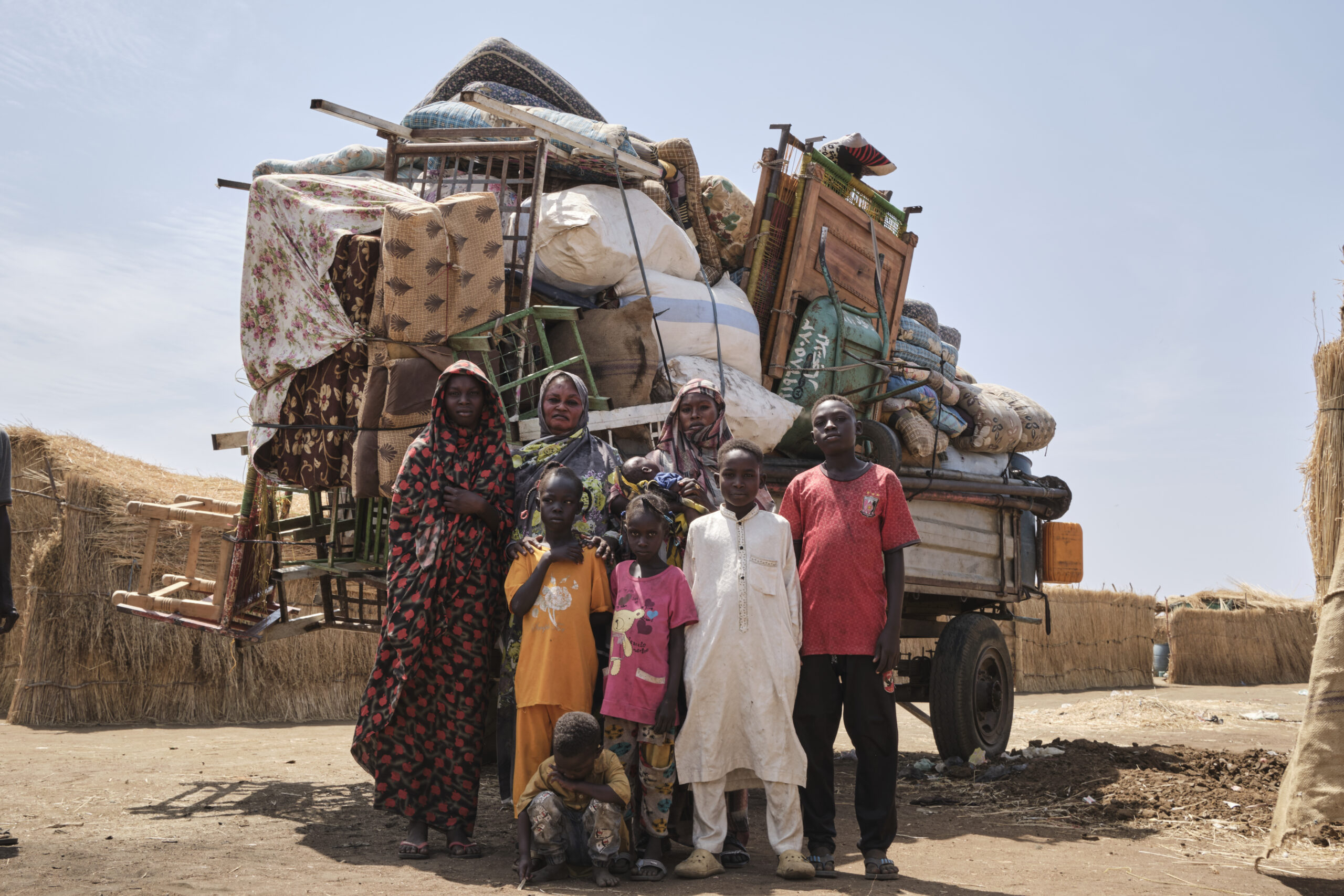
In 2024, more than one-third of forcibly displaced people globally came from just four countries: Sudan, Syria, Afghanistan and Ukraine.
Over 65% of displacements were internal. The Democratic Republic of Congo, Haiti, Lebanon, Sudan, and Ukraine accounted for the majority of these displacements.
On the other hand, just five countries hosted more than one third of the world’s refugees: Germany (2.7 million), Colombia (2.8 million), Iran (3.5 million), Türkiye (2.9 million), and Uganda (1.8 million).
Major displacement crises and host countries
© Abed Zaqot / Gaza
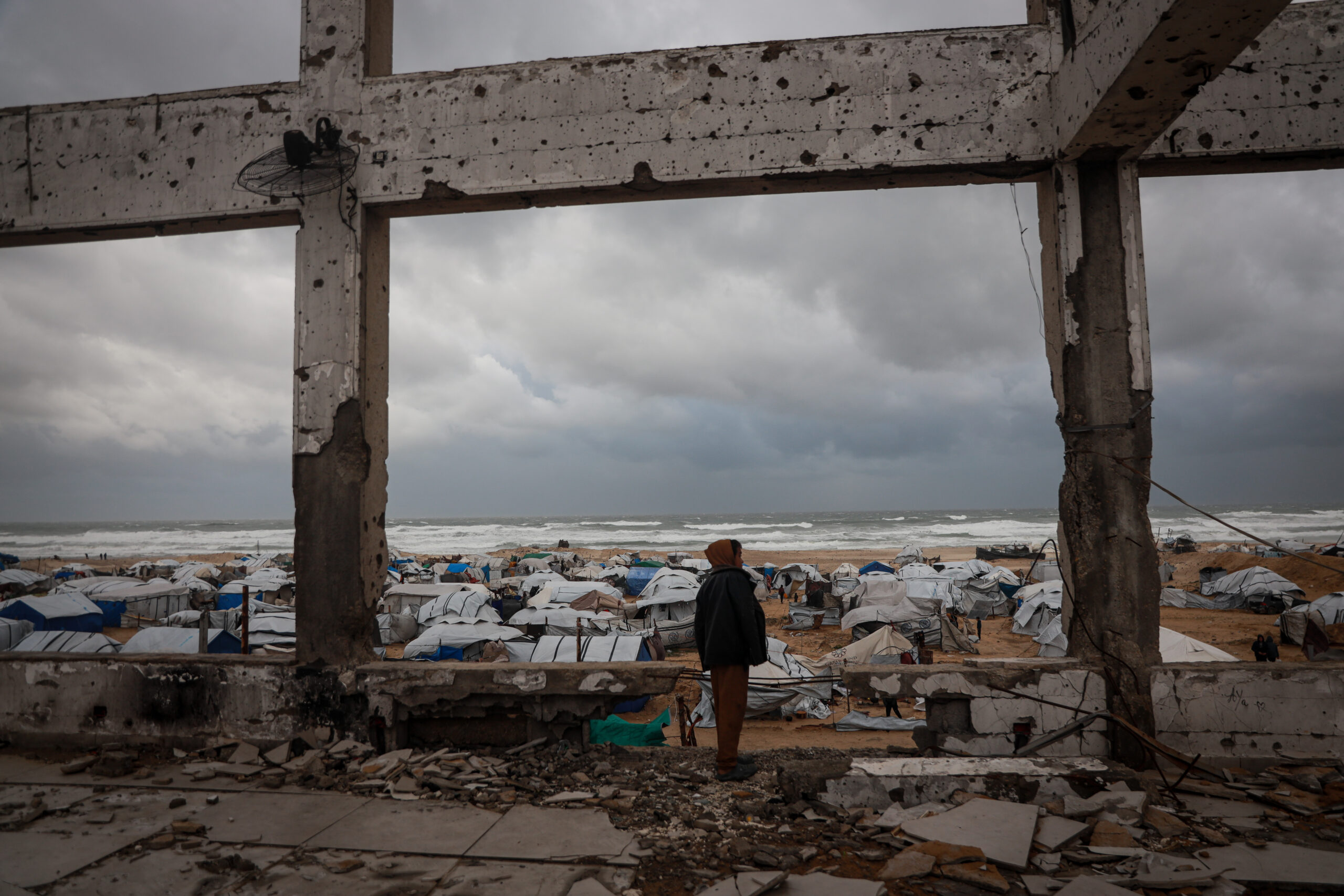
The never-ending genocide of the Palestinian people
The genocide perpetrated by Israel in Palestine continued, amid the passive and lukewarm response of the international community. The military extermination campaign in Gaza and the West Bank has intensified. . In Gaza, the number of people killed now exceeds 55,000, according to official figures, while 1.9 million have been displaced from their homes, without water, food, electricity, no access to education and healthcare. The killings and displacement are also spreading to the West Bank, paving the way for theIsraeli government’s illegal annexation of the territory.
© Jose Antonio Sempere / Albania
2. THE EU AND REFUGEES
Migration routes to the EU
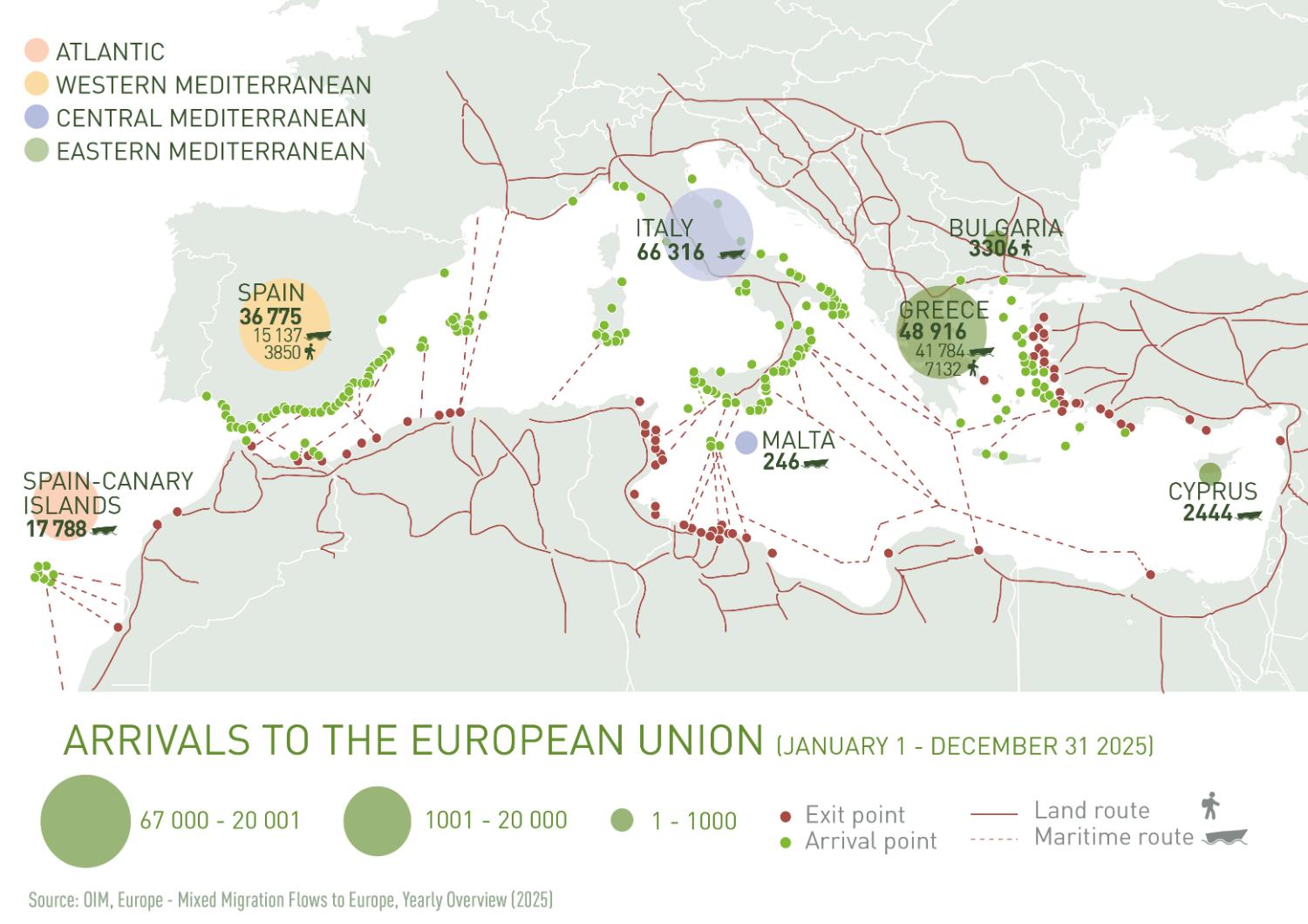
In 2024, a total of 208,679 migrants arrived in the EU, 29% less than in 2023. Once again, the vast majority (91%) did so by sea. Italy, Spain, and Greece remained the main destinations, although arrivals in Italy decreased by up to 58%, while in Spain and Greece they increased by 10% and 30% respectively.
The Mediterranean and Atlantic routes remained the most dangerous on the planet, with at least 3,548 deaths and disappearances. The deadliest crossing was once again the central Mediterranean, which accounted for 66% of these deaths.
Asylum Figures
A total of 995,335 people applied for international protection in the European Union, a 12% less than in 2023. For yet another year, Germany received the most applications, while Spain surpassed France and received the second most. Those seeking asylum came mainly from Syria, Venezuela and Afghanistan.
The European Pact on Migration and Asylum (EPMA)
The European Pact on Migration and Asylum, adopted on 14 May 2024, enshrines a security-based approach to migration, based on containment, border control, and cooperation with third countries. Safe, legal routes are rarely considered, and they pose significant risks in terms of protection.
Member States now have until mid-2026 to fully adapt their legislation and resources to the EPMA. It’s a key phase: Spain can still adopt a rights-based approach in the necessary legislative amendments, primarily in the new Asylum Law.
© CEAR
3. The right to asylum in Spain
More than just numbers
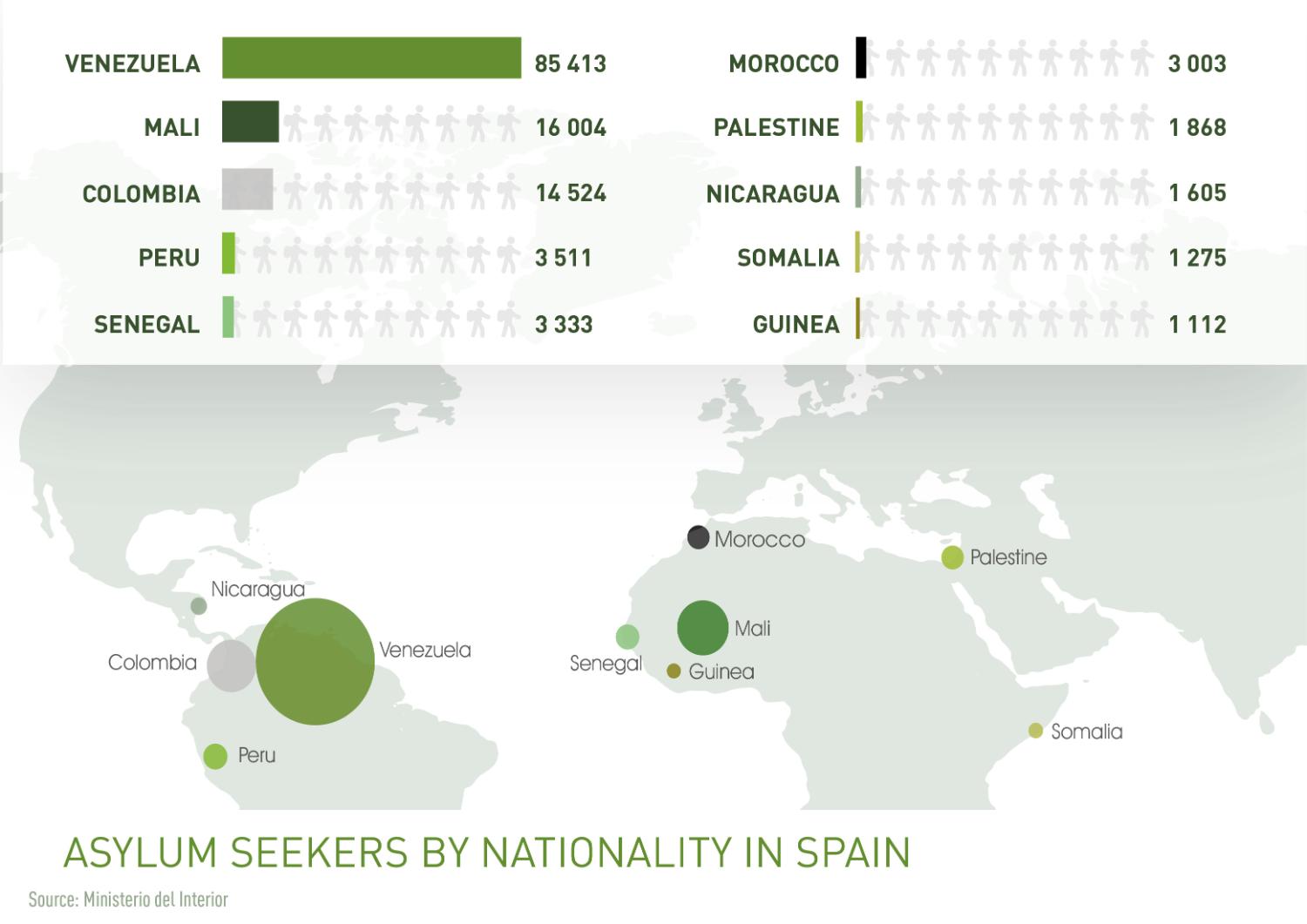
Spain received more international protection applications in 2024 than ever before: 167,366 applications, even if this is just slightly more than in 2023 (163,220, +2.5%). Spain received the second most applications for international protection of all EU countries. Latin America, North Africa, and West Africa were the main regions of origin of applicants: Venezuela and Colombia remained the top countries of origin, while Mali became the third country of origin and bumped Peru down to fourth. Senegal, Morocco, Nicaragua, Honduras, Mauritania, and Ecuador complete the list of the top ten countries.
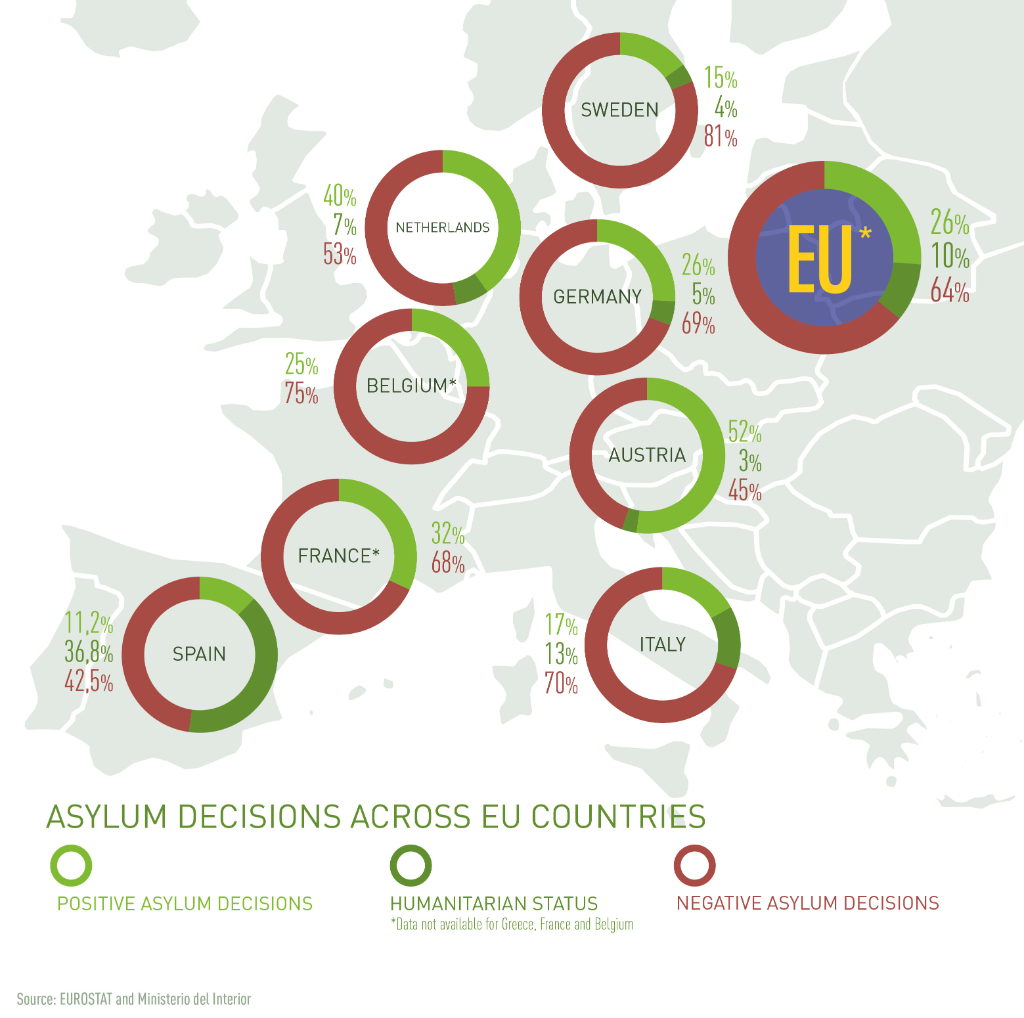
The recognition rate for international protection in Spain increased by six points, reaching 18.5%, although this was mainly due to the exponential increase in the granting of subsidiary protection (next to a decrease in the granting of refugee status, despite it offering greater protection). Despite the increase, Spain remains at the bottom of the European Union, and well below the European average of 46.6%.
In total, 96,281 cases were resolved, or 4% more than in 2023, continuing the upward trend seen since 2019.
However, the number of pending applications increased by 26.6% compared to 2023, with 242,056 people awaiting a decision on which their lives depend.
Obstacles to accessing asylum
Asylum appointments
As in previous years, thousands of people remained in legal limbo because they were unable to obtain appointments to file their applications. The appointment system imposed by the Ministry of the Interior offers one response only: “There are no appointments available.” This situation, which lasts an average of nine months, constitutes a violation of the EU Directives on Procedures and Reception, and CEAR has reported this to the European Commission and the Ombudsman’s Office.
Border procedure
Given the growing number of people in need of international protection arriving at Adolfo Suárez Madrid-Barajas Airport, the General Commissioner for Immigration and Borders has decided to impose new transit visas for nationals from eight countries: Kenya, Senegal, Chad, Sudan, Central African Republic, Mauritania, and Egypt. All of this is happening in parallel with the surge in international protection applicants from these countries, given the serious conflicts and human rights violations they face.
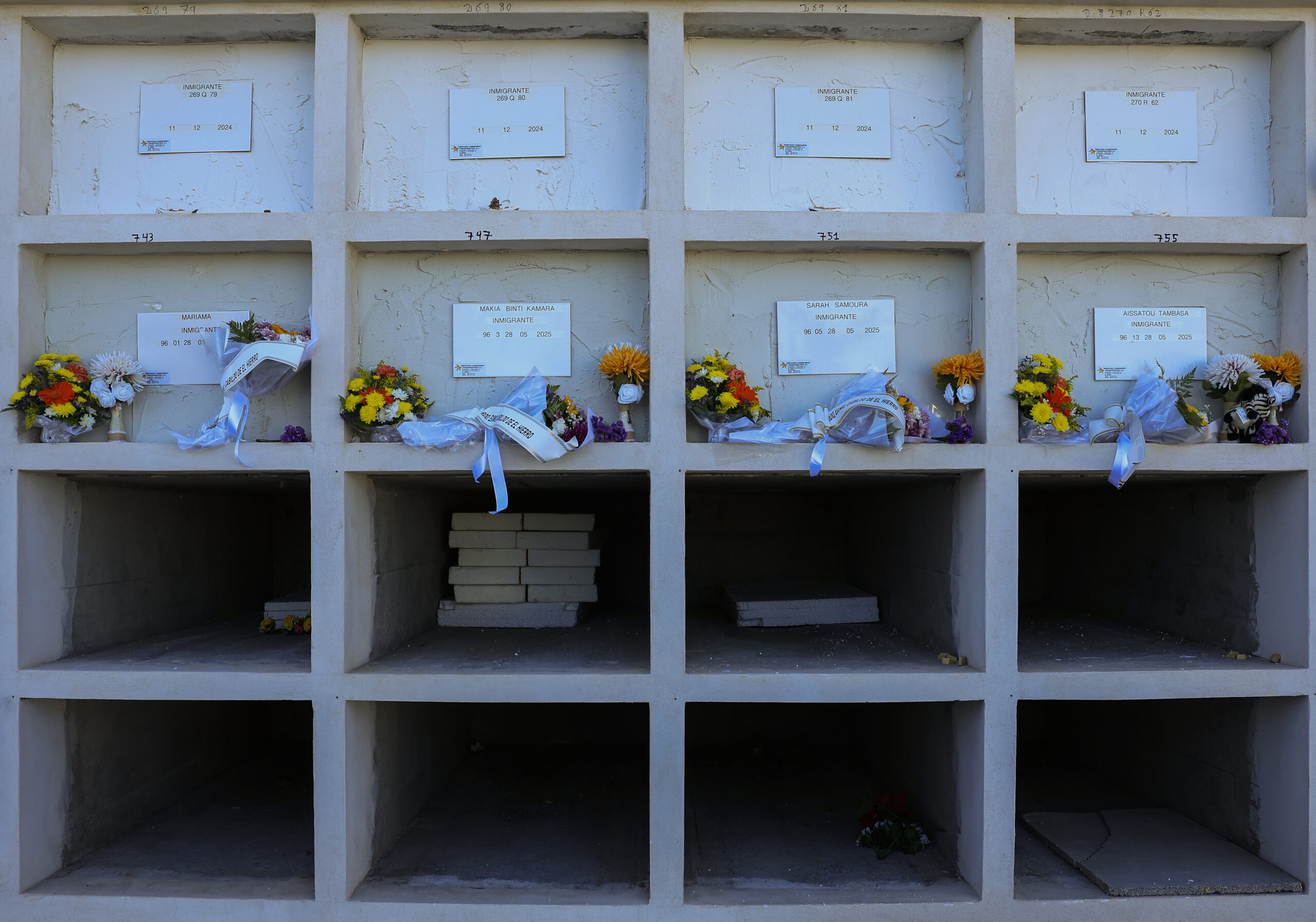
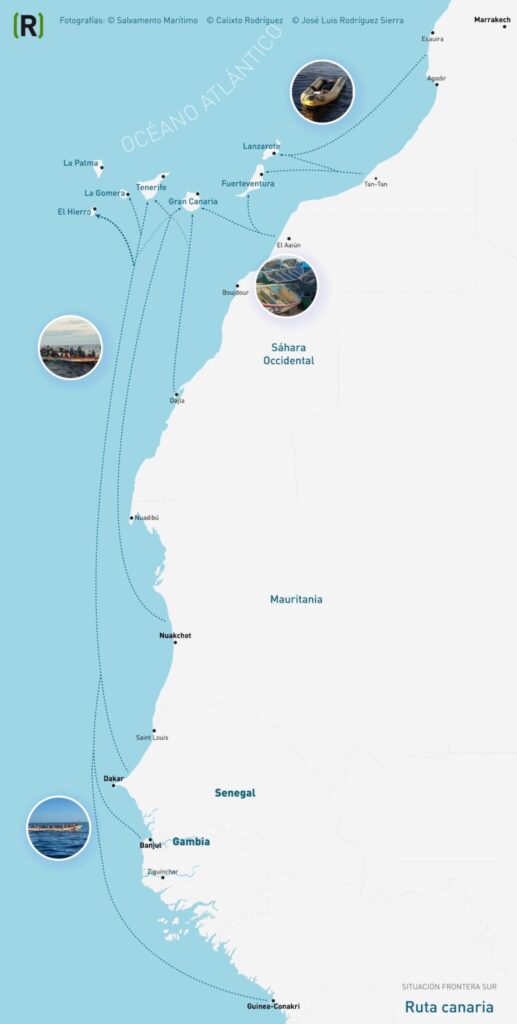
© María Ximena Borrazás / Canary Islands route
4. Southern border
One in seven people arriving on the Canary Islands coast was a child, the vast majority unaccompanied. By the end of 2024, the archipelago was hosting around 5,700 children in approximately 86 facilities. The conditions were not even close to what was necessary to provide decent reception: undersized and overcrowded facilities of precarious quality, and with reports of poor practices.
The response of the central and regional governments has been marked by various milestones, including an agreement reached in March 2025, reflected in the adoption of the royal decree law amending the Immigration Law to establish a mandatory equitable distribution mechanism. The text opens a window of opportunity, while we await the practical implementation of the text.
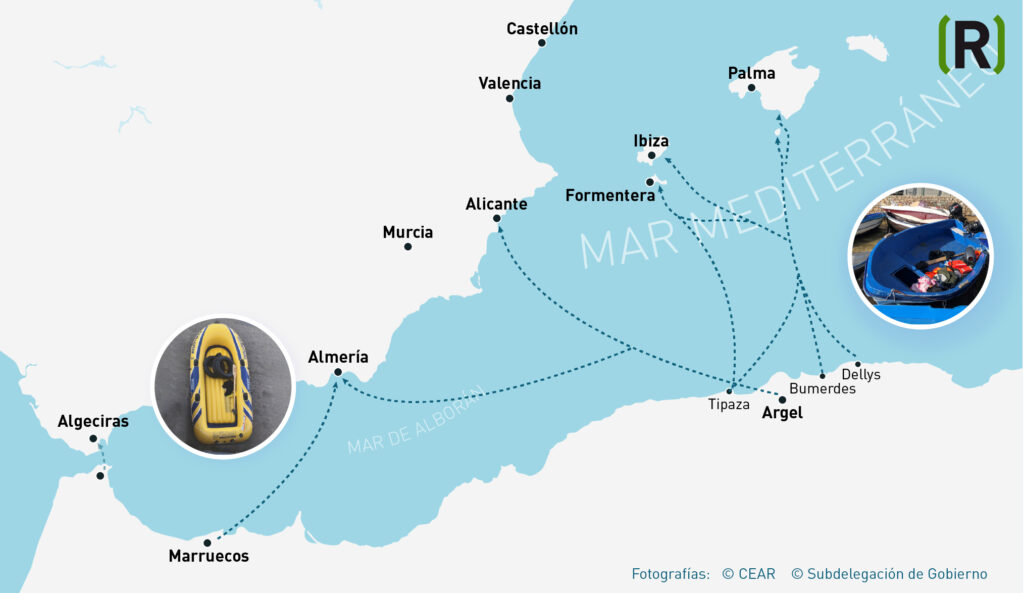
Almería, Murcia, and Levante saw the arrival of people from Algeria, and to a lesser extent, Morocco, and occasionally from Syria, Mali, and Somalia. They arrived mainly in small boats and inflatable boats. In Cadiz, Malaga, and Motril, the downward trend continued. In Cadiz, Malaga, and Motril, the downward trend continued.
In the Balearic Islands, there was a 300% increase in arrivals, mainly of young, single men, especially from Algeria. The increase in women and single-parent families arriving was significant. Children, mostly unaccompanied, accounted for almost 11% of arrivals to the archipelago.
A new route also took shape, linking Somalia to the Balearic Islands via Algeria, on a journey that could take up to two years.
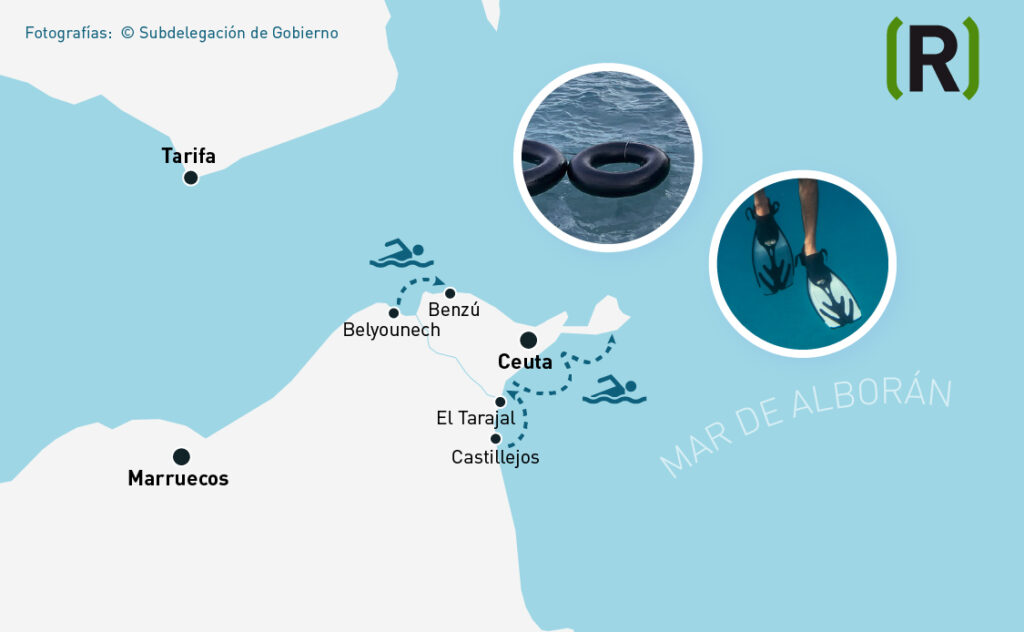
Migrant arrivals to Ceuta by land increased by 137% compared to 2023, while arrivals by sea went down by 58%. Most of the arrivals were young men seeking international protection, mainly from Morocco and Algeria. The flow of minors was also constant, reaching 953.
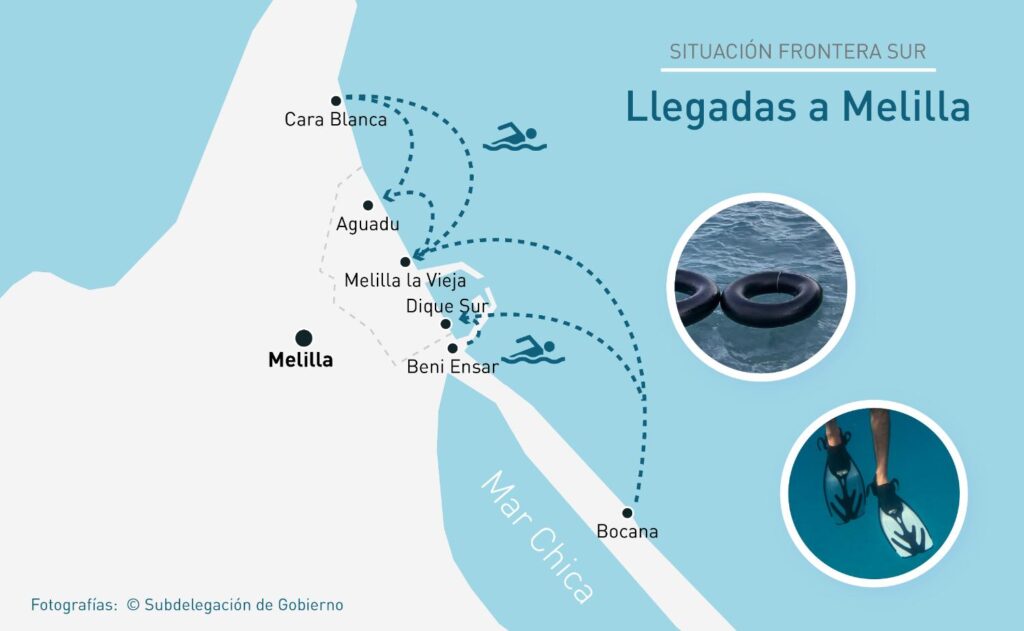
In Melilla, sea arrivals went down by 90%, and land arrivals by 30%. This is due to the pressure Morocco is exerting on migrants attempting to reach Spanish territory. There were ongoing raids on Mount Gurugú to deter those hoping to seek asylum and prevent them from reaching their goal.
Olmo Calvo / Madrid. Demonstration for decent housing
5. Reception and integration
The reception and inclusion system in Spain faced various challenges in 2023. Despite some progress, compared to the previous model there are still challenges linked to the need for robust planning, and greater harmonization ofcriteriaby updating the Management guide.
Assessment of the new reception model
Despite the progress made with respect to the previous model, challenges persist. challenges challenges remain related to the need for sound planning and greater harmonization of criteria through the updating of the Management Manual.
Caring for people in vulnerable situations
The specific needs of people in vulnerable situations remained invisible.
There are still not enough specialized mental health care facilities with long enough stays to provide a comprehensive rehabilitation response. The situation of those who had been under guardianship and who are forced to leave care centers upon reaching adulthood is also concerning, as they sometimes become homeless. Older adults face additional challenges: a lack of support networks, language barriers, a lack of job opportunities, and premature aging.
The impact of the DANA on migrants and refugees
The floods caused by the DANA in 2024 created a context of particular vulnerability for migrants and applicants for international, temporary, and statelessness protection.
In the affected areas, cases of discrimination, racism, and hate crimes were identified, as well as administrative barriers that impeded access to state and regional aid and protection measures, exacerbating their situation.
© Abed Zaqot / Gaza
6. Proposals
Proposals
1.
Guarantee safe, legal pathways for seeking international protection.
2.
Ensure access to the international protection procedure and maintain existing guarantees.
3.
Avoid detention.
4.
Respect the principle of non-refoulement.
5.
Ensure reception conditions are adapted to people in vulnerable situations
6.
Incorporate safeguards for minors.
7.
Improve the quality of the procedure to ensure protection.
8.
Maintain the good practices of the current asylum system.
9.
Guarantee the right to family life.
10.
Establish an independent human rights monitoring mechanism.
7. FOR MORE INFORMATION
EU funding and borders: The role of AI in migration control in the Mediterranean
Big datainfrastructures and artificial intelligence (AI) systems, funded by the European Union and developed by private companies, are playing an increasingly important role in border control. They are being used more and more frequently to predict, prevent, and manage the mobility of people both to and within Europe.
When climate change pushes the sea: people displaced from Senegal
It is estimated that by 2050, there will be around 200 million climate-related displacements, a tenfold increase compared to the current figures estimated by UNHCR. Sub-Saharan Africa is expected to be the region most affected, particularly the Sahel, where climate change is causing water stress, agricultural decline, food insecurity, resource conflicts, and forced displacement.
© Borja Abargues / Senegal
Materials
OTHER DOCUMENTS
CEAR's proposals for the new Asylum Law
In view of the announcement of a new Asylum Law, we hope that the proposals of civil society will be heard and taken into account in the configuration of the new regulatory framework to be approved in Spain, interpreting the European Pact on Migration and Asylum from an approach focused on people and their rights.
Proposals for the implementation of the European Pact on Migration and Asylum with a protection and human rights approach.
The European Pact on Migration and Asylum entered into force on June 11, 2024. However, due to the complexity and interrelation of the new legislation, a transitional period of two years has been established for its implementation. In this context, CEAR presents the following proposals addressed to the Government of Spain to ensure that the National Implementation Plan is elaborated from an approach based on guarantees, solidarity and focused on the protection of migrants, asylum seekers and refugees, and with full respect for international law and human rights.